
Can new homes have mold?
Yes. Rain exposure during construction does not automatically mean mold is present, but damp materials that are enclosed before they dry can create conditions for mold growth.
A newly built home can have a moisture history. The age of a house alone does not tell you whether building materials became wet during construction or dried adequately before they were enclosed.
If you have driven past a home being built during a rainstorm, you may have seen workers leave the site while the framing, floor sheathing, and stacks of lumber remain exposed. When the weather clears, construction resumes. However, sunshine and a dry-looking surface do not confirm that the wood has dried throughout.
In my experience, construction materials can remain exposed for extended periods—sometimes for months. In more than 20 years of inspecting homes, I have inspected and tested hundreds of newer homes with mold concerns. That experience has taught me to look beyond a home’s age and exterior finish and consider what happened to its materials during construction.
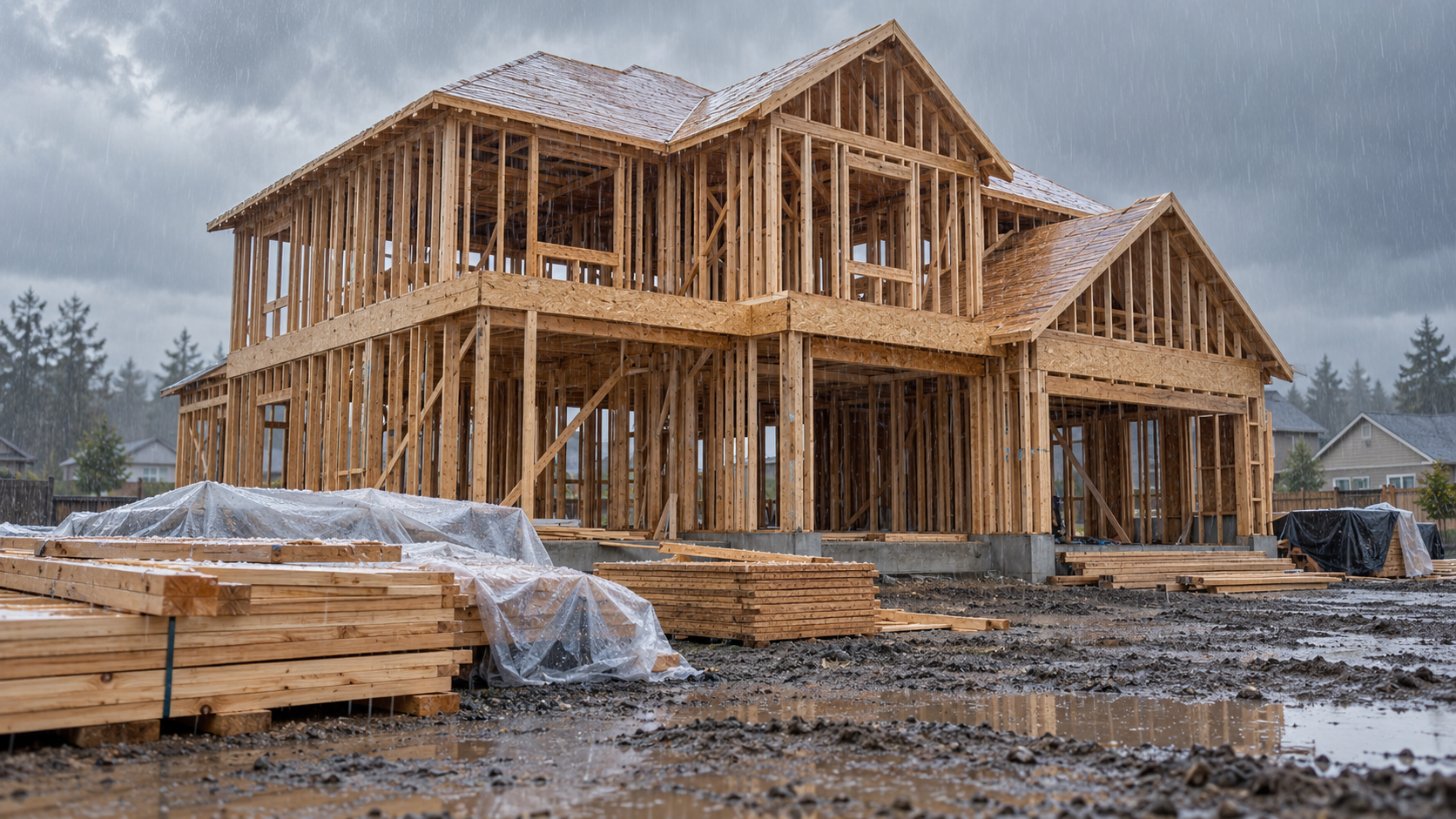
How Can Mold Develop in a New Home?
Mold needs moisture. Wood and other building materials may become wet and dry without developing mold. The concern is moisture that remains long enough for growth to occur, particularly when damp materials are enclosed inside walls, floors, or ceilings before they dry.
A wall can look finished while concealing moisture in the framing, sheathing, or insulation. Once these materials are covered, drying may become slower and the remaining moisture more difficult to detect.
The U.S. Environmental Protection Agency recommends drying water-damaged materials promptly—generally within 24 to 48 hours—to help prevent mold. That is practical prevention guidance, not a guarantee that mold will or will not develop at a precise hour.
What Moisture Content Should Wood Framing Have Before It Is Enclosed?
The U.S. Department of Energy’s Building America Solution Center recommends checking framing, sheathing, and insulation for dampness before enclosing walls.
It cites an ENERGY STAR recommendation to test framing with a moisture meter and confirm that lumber is at or below 18% moisture content before drywall is installed.
The 18% figure is a recommended construction guideline. It is not a universal code requirement or a guarantee that mold cannot grow below that number. The building material, moisture meter, manufacturer’s instructions, environmental conditions, and local requirements should all be considered.
The practical point is to identify damp materials and allow them to dry adequately before they are covered.
Does a Code Inspector Check Every Board for Moisture?
Homeowners should not assume that a routine framing inspection includes moisture-meter readings on every piece of lumber.
The International Residential Code describes a framing and masonry inspection that takes place after the roof, framing, firestopping, draftstopping, and bracing are in place and the applicable rough trade inspections are approved.
That inspection scope does not specify board-by-board moisture testing. Local codes and inspection practices may vary.
Checking framing moisture before insulation and drywall are installed is a separate construction quality-control step. Homeowners can ask the builder whether damp materials were dried and whether moisture readings were taken before the walls were closed.
Were EIFS and Stucco the Main Concern in the 1990s?
During the 1990s, significant attention focused on water intrusion in certain EIFS—Exterior Insulation and Finish Systems, sometimes called synthetic stucco—and stucco-clad homes.
Building-science research from that period documented moisture-related failures in some EIFS assemblies, particularly when water entered and could not drain or dry adequately.
That history explains why many homeowners associate mold in newer homes with EIFS or stucco. Those systems can experience moisture problems, but they are not the only potential source.
Newer homes with other exterior finishes can also have moisture concerns related to construction exposure, leaks, flashing details, drainage, or condensation.
What Other Moisture Problems Can Affect a Newer Home?
Moisture can enter or accumulate in a newer home through:
- Roof or plumbing leaks
- Window, door, or flashing details
- Damp construction materials enclosed before drying
- Poor drainage around the foundation
- Condensation or elevated indoor humidity
- Water intrusion around penetrations or exterior-wall transitions
The source is not always visible from the room where an odor, stain, or other concern appears. Moisture can remain concealed behind drywall, below flooring, in a basement, or in an attic.
What Should You Ask the Builder?
If you are building or buying a new home, consider asking:
- Were the framing or sheathing materials exposed to rain?
- How were damp materials dried before they were covered?
- Were moisture readings taken before insulation and drywall were installed?
- Were any leaks or wet materials documented during construction?
- Were affected materials rechecked after drying?
The answers can help clarify what happened during construction and whether a closer evaluation is appropriate.
When Should a Newer Home Be Evaluated for Mold or Moisture?
A newer home may warrant further evaluation if you notice:
- Persistent musty odors
- Visible mold-like growth
- Water staining
- Recurring condensation
- Warped or deteriorating building materials
- A known roof, plumbing, or exterior leak
- Unexplained dampness or elevated indoor humidity
An evaluation should consider the moisture source, affected building materials, and whether sampling can answer a specific question.
Testing alone does not identify or correct the source of moisture. The assessment should focus on understanding where the moisture originated, where it traveled, and which materials may have been affected.
An independent mold inspection and testing can help evaluate these conditions when warning signs or a documented moisture event are present.
Can New Homes Have Hidden Mold?
Yes, new homes can have hidden mold. However, rain exposure during construction does not establish that mold is present.
The most useful question is not simply how old the home is. It is whether moisture entered the structure, where it went, how long materials remained damp, and whether those materials dried before the home was enclosed.
This article provides general educational information. A site-specific inspection is needed to evaluate the conditions in an individual home.
Sources
Building Science Corporation: EIFS—Problems and Solutions
U.S. EPA: A Brief Guide to Mold, Moisture and Your Home
DOE Building America Solution Center: Building Materials with High Moisture Content Not Enclosed
International Residential Code, 2024: Frame and Masonry Inspection