
Which Mold Test Is Right for My Situation? The right method depends on the question, the property findings, and how the result could change your next decision—not on choosing the largest panel available.
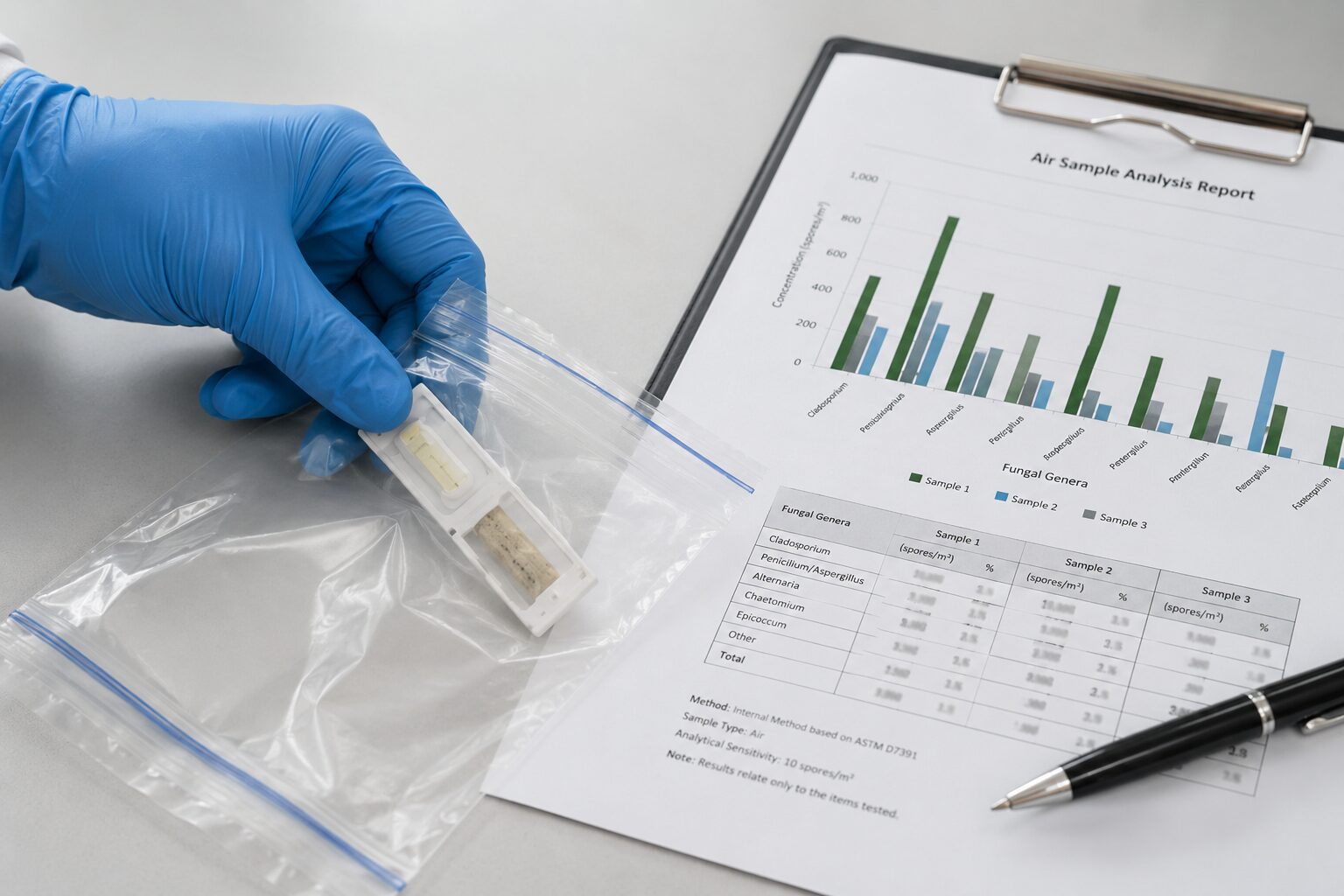
Before comparing test names, describe what you need to understand. A suspicious mark, an unexplained odor, a previous water event, and a clinician’s specific request may call for different discussions. No single method answers every environmental or health question.
Define the question in plain language
Try completing this sentence: “I need to know whether…” Be precise about the uncertainty. Do you want to characterize material on a surface, investigate conditions in a room, understand a dust result, or clarify whether a repaired area needs further evaluation?
Then ask the consultant to explain why sampling is useful at all. EPA notes that visible growth often does not require testing. An assessment should not begin with an automatic package before the concern is understood.
Compare methods by what they examine
| Method | What is collected or analyzed | Main limit to discuss |
|---|---|---|
| Air sampling | A defined volume of air collected under recorded conditions | A short collection does not represent every time, room, or concealed assembly. |
| Tape or swab sampling | Material collected from a selected surface | The result relates to that collected area, not the entire property. |
| Bulk sampling | A submitted piece of material | Selection and location affect what the finding can represent. |
| DNA dust analysis | Fungal targets specified by the laboratory method in collected dust | Target detection does not independently locate a source or establish active growth. |
| Environmental mycotoxin analysis | Specified compounds in the submitted material | Detection is not a personal exposure-dose measurement or a medical diagnosis. |
Methods and laboratory panels differ. Obtain the actual scope, collection protocol, and reporting units for the test being proposed. A generic comparison table cannot substitute for those details.
Understand location and timing
Ask how collection areas are chosen and what recent activities should be documented. Provide the history of cleaning, repairs, water events, and relevant access restrictions. Do not deliberately alter normal conditions to produce a preferred result; follow the specific instructions agreed for the assessment.
If a clinician requests a particular test, share the written request before the appointment. Clarify whether the requested environmental method is available and what it can establish. An environmental consultant should not reinterpret a medical request as permission to diagnose illness.
Interpret the result with the inspection
A laboratory report needs context. What conditions were observed? What was the suspected source? Which areas remained inaccessible? What conclusions are supported, and which remain uncertain? A reassuring or concerning number should not override those questions.
NIOSH cautions that short-term airborne measurements cannot be translated into health risk. A sample result should therefore describe the relevant environmental evidence without promising that a person is safe, sick, or unaffected.
Ask for the full cost and next step
- What does each sample and laboratory analysis cost?
- How many samples are anticipated, and why?
- Is interpretation included in the written report?
- Will you discuss the findings with me?
- What would you recommend if I decide not to sample?
These questions keep the decision focused on value rather than sample count. More results are useful only if their collection and interpretation answer meaningful questions.
Read the inspection-cost guide for comparing proposals. The Premier Plus Assessment overview explains EnviroProz’s advanced options without replacing an individualized discussion.
Common questions
Is DNA dust testing the same as air testing?
No. They collect different material and use different analytical approaches.
Should everyone choose advanced testing?
No. Begin with the question and whether the result would be useful for a defined decision.
Will one test find every mold source?
No. Collection scope, access, method, and property conditions limit every assessment.